Monday, 10 August 2026

Wollongbar Update

 Back in 2019, the Wollongbar Institute celebrated 125 years of service to primary industry. That service included the training of Dreadnought Boys from 1913 to 1929. In the blog post of 8 September 2019, we highlighted the registers which had details of Dreadnought Boys who were trained at Wollongbar, as farm apprentices. Those books and the information in them, were accessible there at Wollongbar.


However, things have changed at Wollongbar!

Due to New South Wales State Government cut backs, the laboratory and library were closed earlier this year. The documents, including the Dreadnought material were catalogued and sent to the archives of State Records. The registers are not now accessible locally.

The building involved, ''F Block'', has been renovated, and one of its rooms is now named the ''Dreadnought Room''.

Negotiations are underway to have a digital copy of the Dreadnought material, especially the registers, available at the Alstonville Plateau Historical Society (as well as at the Institute). We will let you know when this has been resolved.

Thursday, 12 March 2026

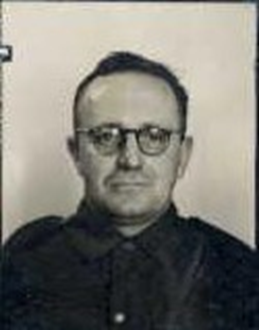
Axel Poignant

 Harald Emil Axel Poignant was born in Leeds Yorkshire on 12 December 1906, to Axel Jonas and Annie Lake Poignant. His mother was English, and his father was born in Sweden but would become a naturalised British subject. By 1911 the family were in Harrogate where Axel went to school at Grosvenor House. Their staff included a foot-man, a cook and a nurse, making a rather formal home life for Axel and his two younger sisters.


With the outbreak of World War 1, his father joined the British Army, in the West Yorkshire Regiment. He served with distinction and in 1919, the now Lieutenant-Colonel Poignant MC. OBE., decided to move his wife, son and surviving daughter to Sweden. Once there he reverted back to being a Swedish citizen.

With his education disrupted, young Axel was initially sent to Gotland, a Swedish offshore island, then he spent a year as a sea cadet on a Swedish windjammer. He was in mainland Sweden from late 1922 to the end of 1925, doing office work. However, with strains developing between father and son, it was time for him to move on. That opportunity came as his Swedish Aunt Maria in Harrogate urged him back to UK, and told him about the Dreadnought Scheme.

On the 27 May 1926, Axel Poignant emigrated from Liverpool, under the Dreadnought Scheme, on the SS Pakeha. There were 47 other boys in their group on the ship which arrived in Sydney on 17 July. He was sent to Scheyville for farm training, and then placed on a farm at Coolamon, near Junee in southern New South Wales.


Axel's experience of rural life was far from easy. His second year (1927) saw the start of a serious drought across Australia, and towards the end of winter, it hit the Riverina area of southern New South Wales suddenly and hard. Stock losses and crop failures were wide spread, and Axel's health broke down. After 18 months of rural work, he headed back to Sydney. But there was no work there, so back to the bush, where even casual work was not to be found. Still unemployed in 1928, Axel Poignant was camped in the French's Forest above Dee Why in Sydney. He was able to make some money by picking wildflowers illegally, and taking them to the florists in the city's Rowe Street. This weekly trip enabled him to borrow books from the Municipal Library, and widen his knowledge of Australian life.

Axel began attending Theosophical Society lectures. At one, a fainting fit which was probably due to his hunger, triggered a closer association with that community. His friends there looked out for him, and he eventually moved into the society's community house in Mosman. While there, Axel met and, in early 1930, married Sandra Chase. He also gained employment with the Electrolux Company, then at Gestetner Office Machines (predecessors of photocopying machines). Document reproduction with a half-tone stencil process stirred up his photographic interest.

Right from his early teens, Axel had an interest in photography. Just prior to his trip to Australia, he had acquired a vest-pocket camera which he used extensively on the voyage out, and during his training at Scheyville. His emerging talent as a storyteller was shown by the albums he made with his pictures. Thus in 1930, Axel Poignant was soon taking home portraits, developing them in the community's laundry, and adding to his meagre salary.

Later that year, Axel and his wife returned to live in Perth, Western Australia, in her mother's house. He was able to continue with his photography working from home, specialising in portraits, most often of children. As a specialty, he made available to his customers, a small booklet containing an assembly of the proof prints.

During the early 1930s, Axel Poignant was experimenting with his photographic style, moving away from a romantic or idealized depiction, preferring a picture where the content showed its reality, where fresh aspects of the real world and contemporary life could be seen. Significant technical development had been happening with cameras. Axel was able to expand his techniques when he acquired (second-hand) a standard 35mm Leica camera.

The camera acquisition was one benefit from working for Western Mining Company in its aerial survey assembly team, from late 1933 to September 1934. The other benefits were the additional income, and a special appreciation of the aerial viewpoint. Then followed his photographing of Karri logging at Pemberton, of Kalgoorlie mines, aerial views of the Duke of Gloucester's arrival in Perth and Anzac Day Dawn Service, where Poignant's style and the choice of angles proved to be innovative.

It is beyond our scope to detail Axel Poignant's photographic work over the ensuing years. However, it is important to note that, in 1942, he began his extensive photographic documentation of the outback and Aboriginal people, travelling the Canning Stock Route by camel.

By the beginning of 1942, Poignant tried to enlist in the Royal Australian Air Force, no doubt inspired by his aerial photography work. He was blocked by his tangled citizenship. Born, he thought, a British citizen in 1906, he came to Australia as a Dreadnought Boy with British nationality, in 1926 - NO, that was a mistake. When his father reverted to Swedish nationality Axel Poignant, as a minor at that time, became Swedish also, automatically losing British nationality.

Divorced in 1941, Poignant was naturalised in July 1942 and married to Ruth Petterson a few weeks later. He enlisted on 29 March 1943, in the Australian Army, and was attached to the Land Headquarters Electrical and Mechanical Engineering School, at Ingleburn in Sydney. He was discharged in September 1945, to work on Ealing Studio's film The Overlanders, as a cameraman with Director Harry Watt. These months in the Northern Territory galvanised his interest in the Aboriginal people, prompting him to research more about them. He became cameraman for the Australian Government film project, Namatjira The Painter. The three months that he and the crew spent with Albert Namatjira and his family, began to help him see first-hand the bond between the Aborigines and their land.

During the next decade, Axel Poignant was mainly working as a freelance photographer, returning a number of times to the Northern Territory, as well as travelling widely throughout Australia. In 1952, he learned that the government planned to set up a station on the Liverpool River in Arnhem Land. As this would dramatically change life for the Aboriginals there, he spent three months in the North, camped by the Liverpool River. He made thousands of photographs of many aspects of daily and ceremonial life, and about 2,000 of these are held in The National Library of Australia, in Canberra.

Poignant's photographs were exhibited over the years. In 1941 he exhibited jointly with Hal Missingham in Perth, and in 1955 in Sydney, in the Six Photographers exhibition. His work was included in the 1980 Observers of Man exhibition in London. A retrospective exhibition was held later in 1982, at the Art Gallery of NSW.

He was widowered in 1953, and subsequently married Roslyn Izatt from the government film unit. A family reunion in 1956 took them to Europe, where they made their base in London. Axel Poignant did freelance photographic journalism for the BBC and various newspapers, and returned to Australia from time to time; his travels also took him to the Pacific Islands and Papua New Guinea.

Poignant published a number of books in his time, the first being Bush Animals of Australia in 1949. He produced story books for children such as Piccadilly Walkabout in 1957, and a number of others in the 1960s and 70s, where he put his photo-storytelling skills to good use.

Survived by his wife, Axel Poignant died in London, on 5 February 1986, aged 79 years.

This Dreadnought Boy, the self-taught photographer and skilled photo-storyteller, opened the window on Aboriginal life for many of us, showed us ordinary, and unusual, aspects of life in Australia and elsewhere. He expressed himself through images which, ultimately, have been able to speak for themselves.

Sunday, 30 November 2025

Don Mountfort


Donald Mountfort was born in the town of Buckley in Flintshire, North Wales on 30 September 1907. Don’s father was the Colliery Clerk of the Buckley Colliery Company which operated the local colliery. Don had left school at seventeen years of age, and was not interested in the mining industry. He was impressed by films and exhibitions at the British Empire Exhibition 1924, and so with hopes of becoming an Australian farmer, he joined the Dreadnought Scheme. Donald Mountfort sailed from London in early December 1924 on the SS Diogenes, arriving in Sydney 19 January 1925. He was sent first to Scheyville for his farm training, he was then placed on rural properties in country NSW, where he was involved in dairy farm work and also on sheep stations.

Don was a cheerful and confident individual who loved life in Australia. In 1928, on being pressed to return home, he wrote that he would like to stay until the shearing: I do not know how I shall leave Australia even for a holiday. What will I do for my rides in the bush, my shooting and last of all the open life?

During the 12 years that Don spent doing rural work, the most significant of these placements was Mossgiel Station, 30 miles south east of Ivanhoe in western NSW. Mossgiel Station covered an area of 350 square miles or 225,000 acres (91,000 hectares). Paddock sizes varied from 10 to 10,000 acres. These huge portions, in comparison to those in Wales, needed a completely different mindset. As a young farmhand, Don was involved in work with the sheep such as mustering, droving, crutching and butchering. All the equipment and facilities of this large station needed to be kept in serviceable condition, and that meant fencing repair and renewal, mending telephone lines, repairing wells, windmills and bores. Don became known for resurrecting failed shearing machines. Sunday was a chance for rest and recreation and tennis, shooting, swimming or picnicking, were available activities, as well as just relaxing.

The big distances between properties and people made socialising quite difficult. But dances were held in the local Hall, to raise money for the small hospitals and charities in this region, and people came from as far as 80 km away.

As a schoolboy, Don's hobby was making wireless sets. While at Mossgiel he took up the hobby again and, in 1935, entered a £100 Circuit Competition. He received only a Mention, but HMV sent him a set for trial in the outback, which Don modified for daytime reception of the 2UE race broadcasts. This led to further contact and, in early 1938, a job selling and repairing radios in the Boggabilla district (on the Queensland border, 800 km north east of Mossgiel). In late 1938 he became manager of the radio/electrical department of a large country store in the central west town of Parkes, where he remained until World War 2 was underway.

Don, having no permanent home, no relatives and his sole assets contained in two suitcases, was hesitant to take on married life. Nevertheless, in 1940 whilst in Parkes, he married Christina Annison. Then in 1942, he applied to both air force and army to enlist and both turned him down on medical grounds, he was colour blind and had a heart murmur. Sent by the Government’s ‘Manpower Directorate’ to Amalgamated Wireless Australasia (AWA) in Sydney, he was involved with the development and manufacture of radio communications equipment during the war years.

As soon as the war ended, he opened a small radio/electrical business in the suburb of Maroubra, Don Mountfort Radio Service, but found getting anything to sell almost impossible and frequent blackouts interfered with repair work. Acquiring a generator, he was able to carry on, hiring out amplification equipment. He ran several outdoor concerts for the Police Boys Club. Police closed Anzac Parade, and hundreds of people came. With lights and amplification through a 100-watt amplifier built by Don, up on the tray of a tabletop truck, the shows had great sound, and good money was raised.

Don also supported the club in 1946, in organising the Australian Motor Cyclists Union Quarter Mile Acceleration Test Australian Championship. Twelve thousand people came to watch 250 competitors at Bankstown Aerodrome in the morning and an air pageant in the afternoon.

 Don Mountfort

In 1958, both his wife and his father (who had also migrated to Australia) passed away. Don subsequently opened a new store in Anzac Parade Kingsford, 4km nearer the city. He was also keen on lapidary and gemmology, and was able to include these in his business interests. In 1967 he completed the two-year diploma course to become a Fellow of the Gemmological Association of Australia. He also taught lapidary and gem identification at the Bondi-Waverley Evening College for ten years.

In 1974, following Roy Moore’s advertisement in the Sydney Morning Herald, he was reunited with two of his old shipmates from the Diogenes, Canon Harold Rawson and Ernie Chambers. To see them again after fifty years, made it a great day in his life.

Don suffered a severe stroke in 1981 and was confined to a wheelchair. In 1982, he married Pamela McDonald, and during the 1990s he wrote his autobiography, From Farm Boy to Leading Radio Man. Don passed away on 10 October 1996.

Don had been a member of the Radio & Electrical Retailers Association Council for ten years, and was described as ‘a fighter and a man who is prepared to do something and have something to say, not be just a ‘yes’ man.’ One of the journals later called him ‘The stormy petrel of the radio industry.’ The Mitchell Library in Sydney holds his records and papers; these include what the library called ‘a long sequence of correspondence with politicians.’ Don Mountfort was clearly an activist and achiever.

Tuesday, 9 September 2025

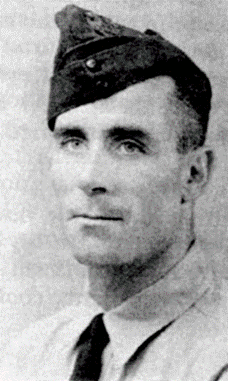
Fred Wolstenholme


Frederick Wolstenholme came from Blackburn in Lancashire, born 11 November 1909 and the youngest of three boys. After leaving school, Fred was doing clerical work when he took the opportunity provided by the Dreadnought Scheme. He sailed on the Barrabool from London Tilbury on 23rd of June 1927, in a group of 29 Dreadnought Boys. The trip out to Australia was memorable - the food wasn't up to much (Fred was always hungry), the seas were rough especially between Cape Town and Adelaide, however, the ship was a one class vessel which meant that the boys had the full run of the ship. Most memorable of all was meeting Beryl Lord, a young school teacher from Wales.

The Barrabool reached Sydney 16th of August 1927. Taken to the Empire Service Club in the city, the boys were offered various country Training Farm locations, and, not knowing where any of them were, Fred chose Wollongbar because it was near Lismore, where his mate said his friend lived. The next nine weeks at the Wollongbar Farm would prove to be a very happy experience for Fred and his young colleagues.

In the course of the next seven years, Fred would find work in 11 different farms in the NSW Northern Rivers area. The first place was a Jersey stud at Binna Burra, 20 km north east of Lismore. Fred soon got fed-up with being eaten by fleas, squelching around on his farm tasks while it rained for two months solid, and being stuck on the farm without a break. When he did get reluctant permission to go and have a haircut, he was loaded up with so many tasks for the trip into town, while there and on the way back, that he was lucky to get to the barbershop, let alone home by 3:00 p.m. After several months Fred found a new job at a Bangalow farm, and others were to follow. Farmers were hit hard as the Depression made funds scarce, and employment became short-term at best.

For almost 5 years Fred saw little of his new country, other than the immediate district where the farms were located, but in 1932, armed with spending money, he took two weeks holiday (at his own expense, of course) and headed for the bright lights of Sydney.

Those two weeks convinced Fred that Sydney was the place for him, but not yet. He returned to the North Coast for a further two years of farm work. During this time, he spent 18 months in the Lismore area, working for Charles Cottee, one of the well-known Cottee Foods family. It was a very positive experience for Fred. Then, in 1934, he gave away farm life and finally decided to try his luck in the city.

Of course, Fred had another reason to go to Sydney. In all his years in the Northern Rivers, he had corresponded with Beryl Lord, who was in Sydney.

Almost immediately he made contact with Mr. HW Cottee and became the first male employee in the Cottee Factory in Leichhardt. At that time the personnel of the firm comprised Messrs. HW Cottee and EN Cottee, one female clerk and three girls under the supervision of Factory Manager Mr AB Cottee. There were no branches of the Company yet, and the soft drink Passiona was the sole product. Practically the whole output was exported to UK and India. However, expansion then followed with a contract for the supply of bulk salted peanuts and this led to the output of peanut butter, jams and spreads. Fred was soon proficient in the production of all of these foods. He became the Company’s first salesman, then their Transport Manager. In 1935 Fred took delivery of the Company’s first Sales Delivery Panel Van — the forerunner of what was to become a large fleet.

Fred and Beryl were married in August 1937, almost exactly 10 years on from their original arrival in Sydney. They subsequently settled in the small suburb of Banksia, in the St George area of the city.

During World War 2, Fred was exempted from service because Cottee’s were fully engaged in providing supplies to the Army.

Fred Wolstenholme in 1961

In 1961, after 27 years with Cottee’s, Fred used long service leave to take Beryl and daughter Margaret to UK. They had warm reunions with relatives and friends, followed by a rewarding tour of Continental countries. Two more visits to UK would be made in later years.

In 1965, Cottee’s was taken over by General Food Products, an American company. Frederick Wolstenholme known as Passa by some, but as Fred by the rest of us, retired from Cottee’s in 1969. He had been a core member of the Company for 35 years.

After nearly 57 years of marriage, Beryl Wolstenholme passed away on 20 March 1994. Fred was aged 87 when he died on 14 December 1996.

Those of us who knew Fred in his later years, knew a tall man with a distinctive black eye-patch, a quiet unassuming man with a ready grin, who would simply yet proudly say, “I was a Dreadnought Boy”.


Fred Wolstenholme (R) with Noel Fidler at the 1994 Reunion


Monday, 7 July 2025

Ralph Wood


Ralph William Wood was born into an army family at Aldershot on 31 March 1911. His family moved to Ireland where his father, a colour sergeant in the Leicestershire Regiment, was sent during the ‘troubles’. In 1919 the family moved to Delhi in India. Ireland, and the trip to Delhi, became powerful memories for Ralph. Back in UK, Ralph left school at fourteen to work in one of many footwear factories in Leicester. Then his employer sent him and Arthur Jefford to the annual engineering exhibition at London Olympia.
 
‘We were in London for the first time. We were goggle eyed at all this huge machinery and thought … there’s a big world out there!’ What they saw and conversations they had there, got them thinking about broadening their horizons. After seeing information about the Dreadnought Boys in a newspaper, Ralph and Arthur (without telling their parents) filled out the Dreadnought application forms. Australia House sent the papers to be signed by the boys’ parents, and references from various people had to be obtained, so it was a great relief when nobody objected.

Ralph Wood and Arthur Jefford arrived in Sydney aboard the SS Baradine on 15 March 1928, and were both sent to Yanco Agricultural Experiment Farm, in the Riverina area of southern NSW. Ralph’s early years in Australia were spent at various farms around nearby Leeton. His experience of sleeping accommodation ranged from the very bad to appalling but was accepted without complaint, and a bit of self-help.

Young Ralph Wood

Five years on, Ralph returned to Depression-hit Sydney. ‘It was the world of soup kitchens and doss houses. I did all sorts of lowly jobs, anything at all. I scrubbed out baths, peeled potatoes in cafes for a couple of feeds. Very rarely were you paid in cash. There were gardening jobs on the North Shore and in Vaucluse and places like that. By the time you’d taken your tram fare out and one thing and another, there wasn’t much left.’

Canon RBS Hammond, the famed Rector of St Barnabas’ Broadway, ran several hostels. They allowed an unemployed man to retain his dignity while looking for work. Ralph lived in one of these ‘Hammond Hotels’. Ralph, who greatly admired Hammond, did odd jobs for him and became his driver. This was the start of better things.

Hammond was a good friend of Sir Phillip Game, the NSW Governor and, one day, got a call from Government House saying there was a vacancy for a temporary worker. It was offered to Ralph who readily accepted. Later Ralph was offered semi-permanent employment with Sir David Anderson, the new Governor. He was a scullery and maintenance man. ‘I enjoyed it. I had a ball. I was getting a reasonable wage and all I could eat. I could even buy myself some clothes from a shop.’

Unfortunately, the governor died and Ralph Wood was made redundant in November 1936. It was back to a Depression-hit workforce. But Ralph had a valuable asset, his driver’s licence had a ‘Government House’ stamp on it. Ralph got a job with a garage, servicing and washing cars at night, ready for senior business men to collect them the next morning. He was servicing and preparing the vehicles, and he was able to sleep in them at night.

In time he was recognised as a motor mechanic, paid enough to rent accommodation and have an improved lifestyle. One of his customers was the United States Trade Commissioner who, impressed by his competence, recommended Ralph to other Americans. One day the Consul called in and explained that his position was being upgraded to Consul-General, and that the new man was on his way. He was bringing his own car and could need a driver.

Ralph met the new man, took him from the ship to the Hotel Australia, offering his services. According to Ralph, ‘He said, “You’ll have to wear a uniform, you know.” I said, “It depends on what you mean by uniform. If you mean a peaked cap and double-breasted coat with buttons down the side and leggings, I don’t think I could be in it.” He said, “Oh no, you’ve been looking at too many American movies. What I have in mind is a dark double-breasted coat and I’ll require you to wear a cap and sometimes gloves. After all we have a position to maintain”.’

Ralph found the Consul-General, Thomas Murray Wilson, a friendly likeable man. He also liked the car, a swank V12 Lincoln Zephyr. Ralph provided the punctual coming and going for the Consul-General, whether around the city or on a country visit. The American was a bachelor, one of the most eligible in town. This involved Ralph Wood in providing discrete advice, and the occasional tactical exit.


Ralph Wood with the American Consul-General’s car

Wilson was replaced by another diplomat in 1940, and the post was upgraded to Ambassador. It was explained to Ralph that, to keep the job, he would have to move to Canberra and find a wife who would be employed as housekeeper. Ralph wasn’t ready for that, so he left, returning to his first love - engineering.

World War II raged, and Ralph took on an adult apprenticeship in fitting and turning, and attended evening classes. In 1941 Ralph applied to join the RAAF but was not accepted because his work was in a ‘reserved occupation’. When he applied to the army, he was accepted. He soon found himself in the Royal Australian Electrical & Mechanical Engineers, based in Sydney and the Northern Territory, rising rapidly to the rank of sergeant. During this time, he met his wife, Kathie.

After the war, he spent ten years running an oil pumping station at Woolloomooloo for the refuelling of ships. He was, for ten years, involved in the completion and commissioning of Sydney’s large Warragamba Dam, and then ten years with the engineering company, Hardy’s.

Ralph Wood and his wife were enthusiastic members of the Sydney-based Dreadnought Association, and he was their next-to-last President in 1995-6. Was he pleased that he came out to Australia under the Dreadnought Scheme? ‘Oh yes, it was the best thing I ever did. I wouldn’t have swapped my life for anything with anybody.’

Bootmaker, farmhand, engineering worker, Government House kitchen hand and chauffeur to the US Consul-General. It is hard to find a Dreadnought Boy with a more varied life than Ralph Wood.


Saturday, 29 March 2025

Rex Wyndham Watson


Rex was born to John and Lily Watson in Woolacombe in North Devon, UK on, it is believed, 17 October 1909. Little is known about his early years except that he succeeded in his secondary education, passing the Junior and Senior Cambridge levels.

Towards the end of 1927, while in Essex, he became aware of opportunities in Australia through the Dreadnought Youth Migration Scheme. At 18 years of age, Rex successfully applied to the scheme, and embarked on the SS Baradine on 25 January 1928. Rex was one of 40 Dreadnought Boys on the ship which berthed in Sydney on 15 March 1928. Of that group, Rex and three other boys were sent to Wollongbar Agricultural Experiment Farm for farm training.

Also on the Baradine, were Fred and Hettie Kille, their daughter Vera (17), and son Maurice (13). They were heading for Lismore in the NSW Northern Rivers area. During the 48-day voyage, Vera and Rex got to know one another in what was later described as a 'mild shipboard romance'. There is little doubt that Rex later made known his preference for Wollongbar (the nearest training place to Lismore).

Following several months of training at Wollongbar, Rex was placed in farmwork, away from the Lismore area for several years. Mrs Kille had a dairy farm at Chelmsford (20 km NW of Lismore) where Rex and Vera lived after they were married on 29 March 1934. Then, in 1935 it was time to move on.

Their first move was to Maclean on the Clarence River, and then on to Perth WA. While there, Rex was injured in a motorcycle accident, resulting in a slight limp. After two years away, the couple moved back east to Casino. In November 1939, Vera’s parents had a car accident - her mother died. Her father needed care, and so Rex and Vera moved to Lismore to live with him. Rex continued to work as a car salesman in Casino.

Rex decided to join the Royal Australian Air Force and was enrolled in the Air Force Reserve, for air crew, on 29 May 1940. To be young enough for pilot training, Rex dropped his age by five years (as well as hiding his limp)! Rex went back to life in Lismore until he was called up for service on 8 November 1940. After initial training at Bradfield Park in northern Sydney, Rex was selected to do flying training at the No.4 Elementary Flying Training School at Mascot Airport, where the DH 82 Tiger Moth was the basic training plane. Graduating on 3 April 1941, Rex went on to the No.2 Service Flying Training School at Forest Hill, near Wagga Wagga NSW. Selected for single-engine training he began conversion to flying Wirraways. Rex completed both service and advanced levels, received a Flying Badge (his ‘Wings’), was classified Airman Pilot on 22 August 1941, and promoted to Sergeant. Rex was then on his way to UK for operational training on Spitfires.

After a slow trip via North America, Rex reached England on 21 December 1941 - nearly 14 years since he left as a Dreadnought Boy. After two months in Shropshire, Rex was sent to RAF Llandow in South Wales, where he flew Spitfires for the first time. In May 1942 he was finally posted an operational Squadron, No. 457 RAAF in Surrey. Here he flew the latest model Mark V Spitfire, just before the squadron, with No. 452 RAAF and No. 54 RAF squadrons, were shipped south to Australia.

With the Japanese attacks on Darwin, and the advance of Japanese forces, these three squadrons of Spitfires were needed for the air defence of Northern Australia. Subsequently, their pilots and ground crew reported to Richmond RAAF Base west of Sydney, and formed No. 1 Fighter Wing under the direct command of Clive 'Killer' Caldwell. When the reassembled new Spitfires finally arrived and familiarisation was complete, the Fighter Wing was transferred to the Northern Territory. Rex Watson was promoted to Flight Sergeant just as the Wing was ready for action there on 1 February 1943.


Rex Watson      (AWM Photo NWA0123)


Rex was in the North until January 1944. In that time attacks occurred about every three weeks, and he was able to play a significant part in the defence of the Darwin area. From the 13 attacks, he destroyed two enemy planes, shared destruction of another and damaged another two. He was one of the most successful pilots in No. 1 Fighter Wing. Early in this time, a photo of Rex in the cockpit of 'Jiminy Cricket' (his Spitfire), was used in a recruiting poster. Other publicity followed his successes. Promotions continued for Rex, first as Pilot Officer in May and then Flying Officer in November 1943. However, the sting of war was always present. On one mission in July 1943, the three other pilots in his section were lost, while he was diverted by radio failure. The loss would hit Rex hard.

In January 1944, Rex was posted to No. 2 Operations Training Unit at Mildura. Here Rex instructed new pilots on Wirraways. This continued after he was transferred to No 8 OTU at Parkes in July 1944. His wife Vera was able to join him while he was at Parkes, for their longest time together during the war. However, after a year as an instructor Rex Watson was keen to get back into action. Somehow, he gained a posting to No. 452 Spitfire Squadron which was based on Morotai, midway between New Guinea and the Phillippines, arriving there in early April 1945. No. 452 Squadron was conducting ground attack missions against Japanese camps and shipping. In his short time there, the now Flight Lieutenant Rex Watson needed every bit of his previous experience, against enemy fighters.

The Squadron participated in the Borneo Campaign during the final months of the war. The Spitfires commenced operations from Labuan on 19 June, with the primary roles of providing air support to Allied troops in the area and air defence for the island. The squadron’s last action occurred on 10 August 1945 but Rex had, just then, been admitted into Brisbane’s Greenslopes Hospital. He was there for the next six weeks, before returning to No. 3 Personnel Depot at Sandgate, Brisbane, and his discharge from the RAAF on 19 December 1945.

Now Rex faced peacetime life. There were opportunities in the community, and on 19 January 1946, he was elected as an Alderman on Lismore City Council. He had been nominated by the Returned Soldiers League. He resumed in car sales, and, he returned to live with Vera and her father Fred in Barham St. East Lismore.

After his wife’s death, Fred’s relationship with Vera had become close and dependent. There were tensions as Rex sought to find his place in the home, and life started to go downhill for him. He began to miss Council commitments, his place on Council being declared vacant in early 1947. He changed from selling cars to selling insurance, which meant often being away from home as he covered his area of the Far North Coast of NSW. Then Rex headed for Sydney.

In Sydney, Rex seriously needed help, and by mid-1947 had been admitted to the Repatriation General Hospital at Concord for physical and psychiatric care. By April 1948, Rex was boarding, but in accommodation unhelpful for either his mental condition or general health. Apart from a Newcastle Sun photograph on 25 June 1953 of Rex with Clive Caldwell and others, at the Air Force rooms in Newcastle the previous evening, details of his life are unclear. On 27 August 1959, the family were informed of his death in Sydney. He had taken his own life.

Like thousands of returned service personnel, Rex Watson showed the symptoms of what, today, we know as Post Traumatic Stress Disorder (PTSD). Although he received treatment, it could not break his downward spiral. Yet his story needs to be known – the Dreadnought Boy, the Farmer, the Fighter Pilot and Ex-serviceman!


(Much of the material for this story was sourced from an unpublished family memoir ‘Searching for Uncle Rex’ written by his nephew Brian Kille.)

Monday, 9 December 2024

Albert Bailey


Albert Bailey was born on 17 October 1908 in South London. The family lived in East Street in Camberwell, near Old Kent Road. By 1911, Albert had four brothers and four sisters; his father George was a motor cab driver. The First World War and its aftermath hit the family hard, so that by the 1920s they were in the grip of poverty. His mother Rose, now on her own, struggled to provide for the large family. Even though he had been learning to be a fitter, the Dreadnought Scheme gave Albert the opportunity he needed.

SS Demosthenes left London on 11 September and arrived in Sydney 28 October 1924, after a very rough voyage. 16-year-old Albert was one of the 60 Dreadnought Boys on board. The group was met on arrival and told of their respective training places. Albert was to go to Scheyville Training Farm.

On completing his farm training at Scheyville in early 1925, Albert Bailey was sent to ‘Malongulli’, a farm on Limestone Creek, between Lyndhurst and Woodstock, in Central West NSW. It was a successful placement and he was able to put his skills to good use there.

He stayed there until he was 21, and in 1929 he returned to London to see his family. However, when the weather became too cold, he decided it was time to return to Australia. He travelled to Australia via Canada. At the time, large numbers of impoverished men were criss-crossing the country looking for work, many getting on to freight trains any way they could, to ride-the-rails.

(Edmonton Journal Photo)


Albert Bailey joined them for travel to Vancouver. From there he paid for his fare across the Pacific Ocean to Sydney, on SS Aorangi.

On board ship he met a man who had a travelling Picture Show, and decided to travel with him around NSW. During their travels in the state’s north, they came to Emmaville, where a local publican hired the Picture Show. When the Show moved on, Albert stayed at Emmaville and was able to get work in tin mining and road construction. In 1934, Albert married Elizabeth Jane Munday, the grand-daughter of the publican.

Around 1938, they moved to Cracow in Queensland, about 500 km north west of Brisbane. He was into mining again, but this time it was gold. It also saw the start of their family.

World War II began in 1939, and when Japanese bombing raids on Darwin and other parts of Australia started in February 1942 and persisted into 1943, Albert Bailey responded by moving with his family to Guildford in south-western Sydney, and enlisting in the Royal Australian Air Force. When the war ended, he stayed with the RAAF until his discharge in 1961.

He was posted to No.2 Aircraft Depot at Richmond Air Base west of Sydney. The Base had sections involved in - armament, erection, radar, airframe repair or modification, metal work, engine repair, wheel /tyre repair, instrument, parachute, and electrical repair. Motor transport repair was also done there. During the war years, crashed aircraft were salvaged, some repaired to fly again, some to provide spare parts.

The aircraft were mainly those of the Transport Wings based at Richmond. After the war these were C47 Dakotas and, from 1958, C130 Hercules became the focus.

                                     C130 Hercules at Richmond Base (Wikimedia Commons.)


Albert Bailey made Sergeant during his service at Richmond Air Base, and his trade skills were put to good use in his years in the RAAF. He remained at Guildford and passed away on 26 June 1986, aged 77 years. His wife Elizabeth survived him by another 26 years.

Albert Bailey, although one of the quiet ones, had fulfilled the hopes of the Dreadnought Scheme.


Friday, 26 July 2024

A Hiccup for the Dreadnought Scheme


After the break caused by World War 1, the Dreadnought Scheme resumed in 1921 and reached full swing by the start of 1922. By the end of 1924, the number of these new arrivals had just passed the pre-war total, with 1803 more working age lads being brought to Australia from UK. This ultimately proved to be the halfway mark of the whole Dreadnought Scheme.

During 1924, a new player began promoting the need for more of these lads to be brought to Australia. Richard Linton, a recently retired businessman, was keen to see a scheme based on his own experience. When he arrived in Sydney from his native New Zealand many years before, he was helped to settle by his older brother who had arrived in previous years. While Linton was in England for the British Empire Exhibition, a group of his colleagues met in Sydney on 15 April 1925, and began what was later called the Big Brother Movement. This movement would provide mentors (Big Brothers) for the lads it brought from UK (Little Brothers).

The first one of these Little Brothers reached Sydney on 31 October, on the SS Sophocles as one of 44 Dreadnought Boys. Another group arrived on the SS Jervis Bay on 14 December 1925, after over a hundred of that contingent had been landed in Perth and Melbourne.

So, what was the problem?

The way Richard Linton chose get his scheme under way in UK, resulted in widespread confusion among prospective Boys and their parents, Immigration officers here and in the UK, amongst others. It had the potential to derail the Dreadnought Scheme, angering the Dreadnought Trustees. The Prime Minister’s file Dreadnought Scheme and Land Settlement 1921-29 provides some behind-the-scenes insights.

As the first large group of Little Brothers was being farewelled, with great publicity, in London, the Australian High Commissioner there received a disturbing Cablegram, on 2 November 1925. “…little brothers sailing…under Dreadnought Scheme. Trustees do not approve such arrangements, parents and lads should be so advised.” Having learnt unofficially about what was happening, the Dreadnought Trustees had re-acted.  The London HC staff had been assured by Richard Linton “… that Dreadnought Trustees had accepted his Scheme”, and that the PM’s office “were advised on 31 July and 2 October, that Dreadnought Boys were included in the Big Brother List”. Meanwhile, Mr Linton was aboard ship on his way back to Australia.

Following a meeting here in Australia with the Dreadnought Trustees, Deputy Director Hurley of the Commonwealth Immigration Office tersely messaged London on 15 December 1925, “Misunderstanding with Dreadnought Trustees adjusted who now agree all future Dreadnought Lads may be enrolled as Little Brothers.” Some adjustment! This was the polar opposite of the Trustees’ previous position. One suspects that it had been a robust meeting, with the Trustees being reminded that the Commonwealth Government had the final say over who and how migrants came to Australia. Ironically, the High Commission in London had already stopped further inclusion of Dreadnought Boys in the BBM arrangements.

Meanwhile, the High Commissioner Sir Joseph Cook had sent a long cablegram to the Prime Minister, about the “difficulty” with the Movement. In true bureaucratic style, Cook asserted that “the whole cause of the trouble is absence of reply to my cablegram of 3rd November…” (That particular cable did not actually pose questions requiring a specific response!) He went on to express his frustration with Richard Linton, the lack of clear arrangements between the BBM and his office, and bemoaned the (unauthorised) £548, already spent on the movement by his office.

During the following years, operating separately, both the BBM and the Dreadnought Scheme were kept busy bringing working age lads to Australia. But it is little wonder that the Dreadnought Trustees took a dim view of Richard Linton and the BBM. It was unfortunate that, for some years, relations were strained between two effective organisations, who were major contributors to Australia’s immigration story.

And what of the Boys who came on the SS Jervis Bay?

From newspapers of the day, it is quite clear that the group arriving in Sydney, comprised 28 Wembley Exhibition Scholarship winners and 56 Dreadnought Boys.  Of the latter, according to Dreadnought records, 37 Boys went to Scheyville for farm training, 11 went to Cowra, 5 to Glen Innes and 3 went to Grafton for their training. The Big Brother Movement was said to be “co-operating “, and on completion of training each boy was linked to their mentor. So now they were all “Little Brothers.”


References

Alan Gill, Likely Lads and Lasses – Youth Migration to Australia 1911-1983. (Sydney NSW: BBM Ltd, 2005).

Dreadnought Scheme and Land Settlement 1921-29. (Prime Ministers Department file held in the National Archives of Australia).

Sydney Morning Herald, Wed 9 December 1925, p11. Boy Migrants.(http://nla.gov.au/nla.news-article16260096) 

Sun, Mon 14 December 1925, p10. Little Brothers – Welcome to new home.(http://nla.gov.au/nla.news-article223923661)

Tuesday, 21 May 2024

Bill Miller


William John Ernest Miller was born on 11 May 1908 at Catford, London to Ernest and May Miller. Soon after this the family moved to South Croydon in Surrey, where his father worked in the footwear industry.

In the years that followed World War I, conditions were tough and prospects seemed limited for many young people. Then Bill saw

                                            ‘Boys Wanted for Australia, Apply Within’

As Bill later wrote: “This is the advertisement that changed my whole life around. In 1924, at the age of sixteen, I applied to come to Australia and, with the approval of my parents, everything was arranged through the Dreadnought Scheme”.

SS Demosthenes


Bill travelled from London to Tilbury Docks and boarded the SS Demosthenes, which took about six weeks to reach Sydney on 19 March 1925. Bill arrived in Sydney with another 60 boys connected with the scheme, and, with 36 of them, was transported by train and road to Scheyville Training Farm. Here they stayed for the next three months to learn Australian farming methods. Following this farm training, Bill was sent to work on a farm at Dyraaba (21 km north west of Casino) in northern NSW.

During the next eight and a half years, Bill finished his time at Dyraaba and moved on, working on a number of farms in the Casino district. Then, after his marriage to Lorna Oliver on 20 January 1934, he commenced share-farming at Hogarth Range (west of Casino) and later at Ellangowan (south of Casino). The couple went on to have six children.

By 1938, Bill had a growing family and needed a more reliable income than his farmwork was providing so he applied for work with, and was accepted by, the NSW Department of Railways. His decision was well-timed. Drought conditions which had begun occurring in 1937, worsened in 1938 into what became known as the World War 2 Drought. Bill was initially based in Casino for several years before being transferred to Murwillumbah, where he remained until he retired from the Railways in 1970.

A reserved, reliable man of modest expectations, Bill Miller passed away in 2001, aged 93. His parents and sister had predeceased him, and wife Lorna passed away in 2002.

Among the thousands of boys who emigrated with the Dreadnought Scheme, there was a great variety of reasons for doing so. Difficult family relationships and family breakdown were part of the story for many of them. But there were also many who left home, with the approval and assistance of parents who wanted a better future for their son. In Bill Miller’s case, there was always a strong family connection, with his parents and sister Margaret coming as “Ten Pound Poms”, to join him in Murwillumbah in 1948.

Ironically, they each paid the same fare as Bill did, 23 years earlier.


Monday, 26 February 2024

Bert Bridges


“Whoah, that was close!”

Probably not the words used, on the day Bert learnt how dangerous machinery could be. He had fallen off a steam-powered road engine and was run over by one of its big rear wheels. Being a small boy, Bert fitted between the high grips on its tread and escaped with his life, but with serious injury to his pelvis.

Albert William (Bert) Bridges was born on 25 March 1908 in Hendon (North London) to Robert and Rose Bridges, the fifth of seven children. His father had served in the British Army in the Sudan, Egypt, and the Boer War. Bert was six years old, when his father re-joined the Army to serve in France.

Young Bert got work in a picture theatre at Marble Arch. His job was to provide sounds during the screenings of the silent movies. Movies like The Retreat from Moscow and The Angel of Mans called for drums to be beaten off-stage for the thunder of gunfire. It needed imagination and good timing to create realistic sounds, and Bert enjoyed doing it. In 1922, Bert got work with leather goods specialist Garstin’s, in Hendon. He was there for three years, and received a valuable reference from them when he was about to leave England.

Bert had decided to emigrate. Bert, with his younger brother Tom and their friend Dick Willis, applied to travel with the Dreadnought Scheme, which brought them to Australia. They left on the SS Bendigo on 11 November 1926. Bert and Dick were 18 years old and Tom was a year younger. They reached Cape Town and, while there, decided to continue to Australia, on the toss of a coin. And so to Sydney, arriving on 7 January 1927.

In Sydney, they were given £2, put on a train to Cowra, sent to its Agricultural Experiment Farm. Bert’s first eight (hot) weeks were mainly spent cutting burrs. After training at the Farm, he went to Jack Pierce’s dairy in Taragala, South Cowra. This was followed by a brief time back at the Experiment Farm and then with Ernie Goodacre at Penrose, a farm north of Cowra. This was a positive time for Bert, the Goodacre family were very good to him.

The farm jobs were temporary at best, times were difficult, and men needed work. When construction of Wyangla Dam began, jobs became available on road-works to the site. In the hope of getting work, Bert and others were camped in a reserve on Waugoola Creek. They were living off rabbits, and food scraps from a bush kitchen which had been set up for the men working on the dam road. Dick Willis was working at a Mr Scott’s dairy at Warwick, a few miles down from Cowra on the Lachlan River. In 1929, Dick managed to get work in Newcastle, and when he gave notice, the Scotts asked whether he knew of someone to take his place. He went to Waugoola Creek to find Bert. Bert started with Scotts straightaway.

Dick and Bert were not the first Dreadnought Boys to work at the Scott farm. Before them were John Frith and Les Hirst (Check out the story posted back on 31 May 2017).

Despite the Depression the farm remained viable. People still needed to be fed and the farm was self-sufficient in fruit and vegetables. Mr Scott had died in 1926 so his wife and daughters, Maud and Lil, were running the farm.

Tom Bridges had eventually left the Experiment Farm and found work locally, but he gradually went further away, from Grenfell to Young and then Western Australia. He had become a travelling show-man, moving around Australia before staying in the west.

Bert was able to go back to UK for five months in 1933. On return, aged 25, he settled into dairy farming life with the Scotts, who became his family. Then, just before World War 2, he met Grace James. War intervened in their plans - Bert enlisted in December 1941, being posted to the 2/7 Australian Field Ambulance in Canberra, and then in Gympie (Queensland). Brother Tom had also enlisted and was in Darwin when the Japanese attacked. When both Mrs Scott and her daughter Lil had died, Bert was manpowered out of the army in 1944, and returned to the farm.

                                                         
                                                                               Bert Bridges’ Army Photo

Bert and Grace married in April 1945, and had four children in the ensuing eight years. Maud Scott continued to live with the Bridges family. In 1955 the family, with Maud Scott, sailed on a trip to UK. When the ship called into Perth, Tom met them. It was their last contact for some years.

When Maud Scott sold the farm to Bert, he continued to supply milk to the factories at Cowra and Canowindra. He also supplied to the kitchens at Fagan’s Mulyan and Edgell’s Lombardy, which operated at harvest time on these large asparagus farms. His side-line in vealer production also prospered.

Through his contacts Bert heard that Dick Willis was in hospital, ill with lung cancer. Dick lasted until 3 April 1967, aged 58 years. Meanwhile, Bert’s brother Tom had re-established contact with a surprise visit in the early 1960s. In 1974 Bert became ill with failing kidneys. He died on 10 June 1975. Tom continued to visit until his last trip in 1995. Tom died in Perth in 1996.

Back in 1911, one of the Trustees of the Scheme was confident that the young Dreadnought Boys would be our ‘future farmers and soldiers’. Bert Bridges fulfilled that hope and, with his family, made a lasting contribution to the Cowra District as well.

Friday, 8 December 2023

Where was he sent?


Of the enquiries that we get about Dreadnought Boys, most are seeking information about the boy's place of training, and where he was sent for his farm placement. In most cases, the place of training is found in Dreadnought records. If the boy is sent direct to employment, information about only some of the boys is available in those records. For the great majority of boys, no information is shown regarding their farm placement.

Like a Christmas present, we have just been given advice that the missing information may be available, for boys arriving in the years from 1920 to 1939.

Farm placement was arranged by the NSW Department of Labour and Industry, which had correspondence and card index records for immigrants (including Dreadnought Boys) who the Dept. placed. The card index records have been kept and are open to Public Access.

These appear to be two series held in the State Archives Collection:
Museums of History New South Wales - State Archives Collection: Department of Labour and Industry; NRS 5542, Card index to immigrants, 1920-1926 NRS-5542-1-[9/1376]
Museums of History New South Wales - State Archives Collection: Department of Labour and Industry; RNCG, 374, Unidentified card index to immigrants, 1921-1947. RNCG-374-5-[11/23095]

Where we have not been able to provide information about a boy's farm placement, inquirers are advised to contact Museums of History New South Wales to find out if they have further information, for example, in these cards.

To assist MoH staff, information such as the name under which the boy travelled to Sydney, the name of the ship he came on, and the date of his arrival, should be provided.

If you have success, let us know what you’ve found out!

Wednesday, 25 October 2023

Len (Happy) Day

 This day 100 years ago, the Dreadnought Scheme was getting back into full swing after the break due to World War II. A group of 40 Dreadnought Boys were on their way to Australia. One of these was Leonard Victor Day.

 Len Day was born on the 2nd May 1907 in Stoke-Newington in North London. He was the youngest of 6 children born to John and Eleanor Day. As a 16-year-old, he decided to join the Dreadnought Scheme. He travelled from London to Sydney on the SS Diogenes, arriving on 24 November 1923. That night he was put on the SS Orana as a steerage passenger to Byron Bay, on the NSW far north coast. They left Sydney at 10 pm on the Saturday night and arrived in Byron Bay in the early hours of Monday morning. To Len’s surprise, they had heaved-to for a couple of hours on Sunday while everyone, crew and captain, had fished at some special offshore fishing spots. (This was common practice when fair weather had given the ship a good run up the coast.)  

 He caught the train from Byron Bay. He had been told he would be met at the station in South Lismore, but no one was there when he arrived. He did not really know where he was going but, with the help of a local taxicab driver, he was able to confirm by phone that he was expected at the Government’s Experiment Farm at Wollongbar. Len Day was the only one of his group to be sent to the Wollongbar Farm.

 He spent six months at Wollongbar—the first three months were focussed on farm-work training; he received £6 at the start and £5 at the end from the Dreadnought Trust. In the second three months he was paid 7/6d a week by the Farm. After leaving the Farm he went to work at Pimlico for Bert and Harry Walsh on their dairy and a banana plantation. Another Dreadnought Boy, Pat Knight, also worked for them and he and Len were known as ‘Day and Night’. He didn’t mind the cows but carrying the banana bunches, sometimes with a snake included, down the hill on his back, was sheer hard work. His comments were not appreciated.

 His next job was on a cane farm, working with a share-farmer. After three weeks, the share-farmer went to hospital. Len still did his work, but word came from the hospital to ‘tell that bloody Pommie to get off the farm’, with no mention of the wages (over £5) that he was owed. He went to the farm owner, Jim Curran, who told him to keep working and that he would see he was paid, which he did. Curran then got him a job at Paddy Walsh’s butcher shop in Wardell. This was a happy time and he spent two years there. While the work was hard and of long hours, he had the opportunity to learn about butchering and retail trade. During this time, he earned thirty shillings plus his food per week. Eventually he left, on good terms with Paddy, to go to a dairy at Clunes.

 His eighteen months at Clunes with Jack Gallagher was a very happy time. When he left there, he went to Lismore to sell gramophones, pianolas and radios, but met with very little success. This was followed by a job repairing and repolishing second-hand furniture, which was not successful either.

Next was a job painting the buildings at the Lismore Showground, at 12/- a day. When this was finished the Show Society secretary asked him to bury a horse—half a day’s work paying six shillings. This led to further work, as an epidemic had hit the horses.

 After this, it was back to farming at Richmond Hill, Nimbin and Corndale, with wages getting less all the time. He next job was cutting lawns in Lismore. He could cut four lawns a day at 25/- each. Gardening was 4/- a half day and on Saturday he washed four cars at 2/- each - these cars belonged to government agricultural officers. At this stage, Hodge’s seed shop opened in Keen Street and, for 4/- per half day, he helped to introduce a new laying and growing mash to the Lismore poultry farmers. The success was such that he had to give up his gardens and car washing, and he was given a weekly wage and annual holidays. Len had found his niche in retail sales to the farm sector, and he stayed for quite some time.

 On 29 January 1938, Len Day married Marjorie Edith (Madge) Smalley in Lismore.

Len Day (1940)

Len enlisted in the army in July 1940, and was away until November 1945. He served with the 2nd/4th Battalion in Darwin during the Japanese raids, and then in New Guinea from late 1944.

After the war, Len joined the Sunshine Nursery in Lismore where he stayed until 1951. He and Madge then moved to Casino, where he purchased a plant nursery in Colches Street and a small retail nursery/florist shop in Barker Street, to be known as ‘LV Day’. They moved to larger premises in Barker Street and started selling horse-drawn and early-model tractor equipment. This business became known as ‘LV Day and Co.’, when he took on Trevor Mallet and Harold Smith as partners. From a small beginning it grew to become one of the largest tractor and machinery outlets in Australia. It is still known as ‘Days’.

Len and Madge travelled widely, both locally and overseas. They were able to visit his sister Nell, living in the south of England. Len was a Rotarian for many years and this gave rise to travel. He was also a founding member of the Casino Probus Club. Len died on 16 November 1994, aged 87 years. Madge survived him until her death in June 1997.

Len Day’s life in Australia fulfilled the original aims of the Dreadnought Scheme in every sense. As well as farm-work and soldiering, Len was also able to contribute, as a supplier to the farming industry over many years – and being Len Day!


(From photo by Sandra & Warren Cockbain)

Tuesday, 15 August 2023

Philip Lazenby


Philip Lazenby was born in Hull, East Yorkshire, England on 19 October 1905. He went to Selby Street Primary School, West Hull, until it was taken over by the military during World War I. He finished his schooling at fourteen to work with his father, as a booking clerk with the North Eastern Railway. He subsequently worked as an office boy at Winkley and Co., seed merchants, in Hull.

The Dreadnought Scheme was being well publicized. Members of his family, particularly several aunts, considered the scheme to be a good chance of making something of his life and bettering his employment opportunities. So, the decision was taken to apply to the Scheme. Philip Lazenby left England aged sixteen, in April 1922, bound for Australia on the SS Largs Bay. He told the family that he found that the conditions on board ship were good, they were well fed and he enjoyed the voyage, not being at all seasick but excited at embarking on this new adventure.

When the Largs Bay docked in Sydney on 21 June 1922, Philip Lazenby had just two pounds in his pocket. This greatly improved when the Dreadnought Trust paid him another eight pounds a week later.

He was sent to Scheyville and given tuition in farming work, milking cows, looking after poultry, a piggery, and a variety of other farm activities. After six weeks, he was told that he had been allocated to a Mr. Bob Flower, a farmer at Condong in the Tweed River valley in northern NSW. He duly arrived on the Tweed at the end of July 1922.

He started working on the Flowers' farm—feeling very much a ‘learner’ and found Mr Flower to be a tough boss. Philip Lazenby worked from 4 am to 6 pm each day, with just an occasional half day off. He was well fed and housed, but not knowing anybody at the beginning, did not have anything to do in his spare time. Eventually, he befriended some members of the nearby Johnson family, and was able to go to town (Murwillumbah) to the pictures on some week nights, with the Johnson boys.

After two years with Mr. Flower, Philip left to work for the Bignell family on their farm at Byangum, on the other (south west) side of Murwillumbah. Their son-in-law, Harry Kinneally, ran the farm and was his immediate boss. He also provided accommodation at his house for Philip. Again, the hours were long and the work was seven days a week for this Dreadnought Boy. While there and after saving up for a long time, he bought a motorbike to replace his pushbike. He rode to Murwillumbah as often as he could to picture shows, and gradually accumulated a few more friends.

After two years, and a falling out with Harry Kinneally, Philip Lazenby left the Bignell farm and went working on cane farms in the area. While working on the O'Connor farm in Murwillumbah he met Mary Hanrahan, who he later married. Mary was housekeeping for the O'Connor family. He was housed in a shed on the farm, but ate his meals at the family home.

Philip had started cane cutting in 1927, but this was a seasonal industry. So, at the end of the first season he went to Sydney and worked as a builder's labourer. When the Depression, hit he returned to the Tweed and continued cane cutting. Married in July 1934, he and Mary had three children (Keith, Barbara and Brian) before the World War 2 began.

He worked cane cutting until 1940, doing various gardening jobs in the off season. He later worked for over two years as a boiler attendant for George Newell, in his sawmill at Smiths Creek, near Uki in the Upper Tweed valley. Philip Lazenby could now buy his first car. It was an Austin utility, for which he paid twenty-five pounds.

In 1942 he joined the Royal Australian Air Force. After doing his rookie’s course at Bradfield Park in Sydney, his first posting was to Townsville in North Queensland. After two years he was posted to Evans Head, NSW, as a guard (as a sporting shooter with the Murwillumbah Rifle Club he was well acquainted with firearms). Six months later he became an armourer. Early in 1945, he was posted to Borneo where he saw the end of World War 2. Leading Aircraftman Philip Lazenby was discharged on 2 January 1946.


LAC Philip Lazenby


On return to civilian life, he worked for six months for Len Pearson, his brother-in-law, on his banana plantation. Philip Lazenby was soon growing bananas in his own right, having leased land at Smiths Creek and pioneered the farm for dairying. After a few years and with a need for a more regular income, he went to work for the Far North Coast County Council, engaged in weed eradication in the Tweed and Richmond River areas. At this time, Crofton Weed was spreading, and outbreaks of Noogoora Burr were causing particular concern. He worked in this job for the next fourteen years.

In December 1963, he visited the UK and saw his father again. On return from England, Philip worked for the Shire Council for a little while, before joining McLeods Engineering Works in Murwillumbah, as a storeman.

Philip Lazenby’s wife Mary died in January 1985. He passed away in Murwillumbah in December 1997, aged 92 years. A man of modest expectations and modest public profile. Yet we know details of his life, from Philip Lazenby himself, from when he spoke of it to his daughter, Barbara Cook, in 1995.

Thursday, 4 May 2023

The End of an Era

As the fog of the Covid pandemic has lifted, we have been discovering things we missed, just before or during the worst of Covid times. One of these, was the passing of Thomas Joseph Dreha, the last of the Dreadnought Boys. (See story posted 26 March 2017).

                                                                        Tom Dreha (2011)


Tom Dreha and his wife Eileen were in aged care, when Eileen passed away in 2018. With the winding up of the Dreadnought Association, we missed hearing of Tom's death on 11th September 2019, a few days after turning 97 years of age. Tom was buried at Rouse Hill NSW, just a few kilometres from where he began his life in Australia, over 80 years earlier. A few months later, Covid spread across the world.

The passing of Tom Dreha marks the end of an era. The Dreadnought Youth Migration Scheme has finally run its course; the era of pre-World War 2 youth migration is complete.

Yet, for the 7,500 Dreadnought Boys brought to Australia under the Scheme, relatively few of their stories have been told. There is more to do.


Monday, 27 March 2023

Robert Adamson


Occasionally, the Dreadnought records fail to give us a clear picture about a boy's arrival in Sydney. Information about Robert Adamson is a case in point. Robert left England on the SS Barrabool, but when it arrived in Sydney, he wasn't aboard, even though the records say that he was. So, what happened?

Robert Adamson’s family knew little about his early life. His widow Isabel had a keepsake, a luggage tag, with the word Beltana on it. So, it was always believed that this was the ship he had come to Australia on! It was also assumed that he had come to Australia to join his older brother Alexander. But Alexander, 21, had sailed in early 1925, to Melbourne not Sydney.

Robert Adamson’s family never knew that he was a Dreadnought Boy. They thought his life story was all about his capture in Singapore, and then his brutal existence as a Prisoner of War on the Burma Railway during World War II. However, UK shipping records were found showing that Robert Adamson, of Banville Row, Lawrencetown, County Down, Northern Ireland, farm hand, aged 17, left London on P and O’s liner S.S. Barrabool on 25 February 1926. On that voyage were about 1,000 passengers, including 40 stonemasons on their way to work on the Sydney Harbour Bridge, and a party of 45 Dreadnought Boys.

The destination was Sydney, but there were to be stops at Las Palmas, Cape Town, Fremantle, Adelaide, and Melbourne. But Robert’s trip was to be rather different to that planned.


                                                               SS Barrabool

On 17 March 1926, the Barrabool responded to SOS signals coming from the New Zealand Shipping Company’s cargo ship Paparoa. It was on fire off St Helena, in the Atlantic Ocean. The Paparoa carried sixty-nine crew and five passengers. Barrabool passengers (no doubt including Robert) lined the decks for hours, watching people being ferried by lifeboat from the burning cargo ship. All were rescued safely, including six stowaways, two cats and a pedigreed fox terrier. Those rescued were disembarked at Cape Town.

When the Barrabool reached Adelaide on 10th April, the ship was quarantined with an outbreak of smallpox. The passengers bound for Adelaide and those who were ill, were taken to the quarantine station on Torrens Island, where they were disinfected, vaccinated, and placed in quarantine. The remaining passengers heading to Melbourne and Sydney were vaccinated on board before the ship resumed its delayed journey. Robert Adamson had contracted smallpox. The Admission and Discharge Register for the Torrens Island Quarantine Station Hospital shows that Robert Adamson had to be hospitalised. Arrangements were made for Robert and the other affected boys, when released, to complete their journey from Adelaide to Sydney on the S.S. Beltana.

On his arrival in Sydney on 18 May 1926, Robert was sent directly to "Windeena" Balladoran (near Gilgandra) to work for Geo.Plummer. His brother Alexander was on a farm at Annuella, Victoria, and  Robert did go to Melbourne in 1928. They subsequently moved to the Gympie area in Queensland, in 1929.

Robert Adamson married Isabel Rees in 1934 in Gympie, and they had three children. He worked variously as a labourer, a milkman, an insurance salesman, and, as his father in Northern Ireland had done, as a bootmaker.

He enlisted on 26 August 1941 in Gympie. He was working as an Insurance Agent at the time. After time on the Australian mainland, Robert Adamson was transferred to Singapore, arriving on the 24 January 1942. On 15 February, as Singapore fell, he was taken prisoner by the Japanese and held in Changi Prison. A year later he was taken to work on construction of the Burma-Siam Railway. Eventually he was “Received from the Japanese at Siam” on 20 August 1945. Like so many others, he was to suffer ill-health for the rest of his life.

When his health improved enough after the war, Robert Adamson opened a Boot Repair shop. The family had moved to Maryborough and were living in a War Service home in Sussex Street. But it was hard going and, in 1952, he told the POW Trust Fund that the physical demands involved and the poor returns, which only covered shop rent and materials, meant that he would have to soon close the business.

Robert Adamson, lived to the age of only 56 years, and passed away in Maryborough, Queensland in 1965.

He is commemorated, along with other veterans, with a brass plaque in the Queensland Garden of Remembrance, a cemetery maintained by the Department of Veterans Affairs in the Brisbane suburb of Bridgeman Downs.

The Barrabool did bring Robert Adamson to Australia, but only to Adelaide. The Beltana took him the rest of the way to Sydney.


(With thanks to Barbara Adamson.)


Tuesday, 17 January 2023

The Bagshaw Boys


Among the 7,500 boys brought to Australia under the Dreadnought Scheme, there were numerous cases where brothers came, either together or subsequently. Their lives in Australia provide uniquely individual stories. However, where there is a strong lasting bond between the brothers, it can be useful to tell those stories together. Jim and Reg Bagshaw are such brothers.


                                James Bagshaw                                Reginald Bagshaw
 

James Edward Bagshaw was born in Salford, Manchester, on 22 September 1910 to Robert and Elizabeth Bagshaw. The family lived in a terrace house in St Mary’s Street, Hulme, a Manchester suburb. He had four brothers. He belonged to the church choir and the Scouts. His favourite pastime was swimming and he gained a bronze medallion for lifesaving.

Life was a struggle, his father had become an invalid due to war injuries. With five children to support the family’s future looked bleak, especially in 1926. The promised opportunities in the Dreadnought Scheme’s literature convinced James to apply. His job as an office-boy had little hold on him.

One of his brothers, Reginald Hiram Bagshaw, was born on 8 September 1912. He attended St Mary’s Elementary School, Hulme with his brothers. In 1925 he won a scholarship which allowed him to complete his secondary education in Chorlton High School in 1928. This meant he could get work as a clerk. Meanwhile James had gone to Australia.

James Bagshaw left London in July 1927 on the SS Berrima. He was one of 39 Dreadnought Boys on board. He arrived in Sydney on 15 August that year, five weeks before his 17th birthday. On arrival in Australia, he was sent to the Wollongbar Experiment Farm in northern NSW for farm training. Subsequent postings were to the farms of Mr J Duncan, Coffee Camp; Mr D Hines of Woodenbong in 1928 (with whose family he remained lifelong friends); Mr J Reid, Woodenbong; and the Gilmores, Pearces Creek in 1929. At this stage Jim was able to help his brother, and provided for Reg to emigrate, also as a Dreadnought Boy.

Reg Bagshaw arrived in Sydney on the SS Orama on 11 April 1929, with 40 other Boys. He trained at Scheyville, before joining Jim in the Northern Rivers area of NSW. Reg had a variety of jobs around Woodenbong and Urbenville, such as cutting timber and working on dairy farms. By 1931, he had started a bee-keeping business with his brother Jim. Reg had also become involved in the community, entertainment events, and serving on local committees - often as secretary.

The year 1934 saw big change for Jim Bagshaw, now married and with their first child. Based in Urbenville, he worked on the metal-crushing plant for the new road between Urbenville and Bonalbo. In 1935, he moved the family 20km E to Boomi Creek where he worked in Grahams’ Timber Mill. Later, he moved to Bennetts’ Mill at Beaury Creek (6km NW of Urbenville). Here, on weekends, he cut railway sleepers in the nearby state forest and had his own bullock team, as well as maintaining the beehives. Any spare time he had was spent on a very productive vegetable garden and ferreting for rabbits, to supplement the family meals. Compared to brother Reg, except for the Parent & Citizens and Ratepayers Associations, Jim was less involved with organisations.

When World War 2 came, Jim was not able to enlist for war service because of an old foot injury. During the war years three more children were born. Jim worked and saved hard. His wife, an accomplished knitter and dressmaker, found ready customers for her work.

Reg enlisted in the Australian Infantry Forces in August 1940, joining the 9th Australian Division Signal Corps, as a wireless operator. A corporal, he was discharged in November 1945 in Sydney, having served 917 days on active duty outside Australia.

Wounded in action at El Alamein and one of the ‘Rats of Tobruk’, he also saw service in Tripoli. He was later sent to the Pacific theatre of war, where he saw action in both New Guinea and Borneo, participating in amphibious landings at Lae and Finschhafen.

In 1947, after 20 years in Australia, Jim bought ‘Avoca’, his father-in-law’s farm on Boomi Creek, and the family moved into its spacious home. Here, 2 km south of Urbenville, he bred heifers and expanded the beehives. In the 1950s, when honey prices declined, he reluctantly re-opened the dairy, adding pig raising and crop growing to his list of activities. He purchased an ex-army International truck, affectionately named ‘Myra’ (it replaced a Willys Overlander with gas-burner trailer). One day without a word to anyone, Jim arrived home with his first car, a 1949 Holden, to the amazement of the whole family.

Earlier, in 1946, Reg purchased a die-cast welding business at 60 Erskine Street, Sydney. He bought the business on the condition that the previous owner taught him how to weld. By 1947 he had made the final payment and owned the business outright. He specialised in welding all types of carburettors, fuel pumps, mascots, door handles, grilles and crank cases. The business exploited a niche market in the repair of motor vehicles in the immediate post-war period and was ideally situated in the central city area. The business provided a cash flow that enabled Reg to purchase a block of four flats in Fletcher Street, Woollahra in 1949, and to lease another block of flats in St Marks Road, Randwick in 1953. He proved himself to be an astute businessman, dabbled with inventions, tried his hand at sculpture and worked in metal, wax and timber. He left a diverse legacy.

For both brothers, music and performance were major aspects of their lives. Jim’s love of music and dancing led him to meet Janet, the youngest daughter of Scottish migrants William and Janet McLintock. Janet, partly disabled by childhood polio, was the pianist in the family dance band. Jim and Janet married in 1934. Jim had a rather grand bass voice. In 1935 he was a successful contestant in the Lismore Music Eisteddfod, and often participated in musical productions in the district.

In later life, a severe back injury (thanks to a recalcitrant bull) precluded him from sport and dancing, and made many of his activities painful. He loved the challenge of fixing things. He loved listening to operatic records and never missed “World Famous Tenors” on radio.

During these years he successfully invested in the stock market. He never returned to England—he was not one to look back.

In post-war Sydney, Reg sang in a number of Gilbert and Sullivan light opera productions staged by the Savoyers Society. Reg Bagshaw was a capable tenor. Marie Therese Cleary also sang with the society. They married in 1949 and went on to have three children - all boys.

Reg’s early death, brought to an end years of spirited discussions of ‘Sydney or the bush’ and who was the best tenor in the world! Reg Bagshaw died of cancer, after a long illness, on 7 April 1960 aged 47 years.

In 1978, Jim developed leukaemia. Practical and self-sufficient to the end, he elected to allow the disease to take its course, refusing to be ‘a burden on anyone else’. Aged 68 years, Jim Bagshaw died on 30 October 1978 in Lismore Base Hospital.

While the Bagshaw boys’ enduring relationship was not without its tensions, both were well respected men who made solid contributions to their adopted country. They made the most of the opportunity provided by the Dreadnought Scheme.