Showing posts with label Murwillumbah. Show all posts

Tuesday, 21 May 2024

Bill Miller


William John Ernest Miller was born on 11 May 1908 at Catford, London to Ernest and May Miller. Soon after this the family moved to South Croydon in Surrey, where his father worked in the footwear industry.

In the years that followed World War I, conditions were tough and prospects seemed limited for many young people. Then Bill saw

                                            ‘Boys Wanted for Australia, Apply Within’

As Bill later wrote: “This is the advertisement that changed my whole life around. In 1924, at the age of sixteen, I applied to come to Australia and, with the approval of my parents, everything was arranged through the Dreadnought Scheme”.

SS Demosthenes


Bill travelled from London to Tilbury Docks and boarded the SS Demosthenes, which took about six weeks to reach Sydney on 19 March 1925. Bill arrived in Sydney with another 60 boys connected with the scheme, and, with 36 of them, was transported by train and road to Scheyville Training Farm. Here they stayed for the next three months to learn Australian farming methods. Following this farm training, Bill was sent to work on a farm at Dyraaba (21 km north west of Casino) in northern NSW.

During the next eight and a half years, Bill finished his time at Dyraaba and moved on, working on a number of farms in the Casino district. Then, after his marriage to Lorna Oliver on 20 January 1934, he commenced share-farming at Hogarth Range (west of Casino) and later at Ellangowan (south of Casino). The couple went on to have six children.

By 1938, Bill had a growing family and needed a more reliable income than his farmwork was providing so he applied for work with, and was accepted by, the NSW Department of Railways. His decision was well-timed. Drought conditions which had begun occurring in 1937, worsened in 1938 into what became known as the World War 2 Drought. Bill was initially based in Casino for several years before being transferred to Murwillumbah, where he remained until he retired from the Railways in 1970.

A reserved, reliable man of modest expectations, Bill Miller passed away in 2001, aged 93. His parents and sister had predeceased him, and wife Lorna passed away in 2002.

Among the thousands of boys who emigrated with the Dreadnought Scheme, there was a great variety of reasons for doing so. Difficult family relationships and family breakdown were part of the story for many of them. But there were also many who left home, with the approval and assistance of parents who wanted a better future for their son. In Bill Miller’s case, there was always a strong family connection, with his parents and sister Margaret coming as “Ten Pound Poms”, to join him in Murwillumbah in 1948.

Ironically, they each paid the same fare as Bill did, 23 years earlier.


Tuesday, 15 August 2023

Philip Lazenby


Philip Lazenby was born in Hull, East Yorkshire, England on 19 October 1905. He went to Selby Street Primary School, West Hull, until it was taken over by the military during World War I. He finished his schooling at fourteen to work with his father, as a booking clerk with the North Eastern Railway. He subsequently worked as an office boy at Winkley and Co., seed merchants, in Hull.

The Dreadnought Scheme was being well publicized. Members of his family, particularly several aunts, considered the scheme to be a good chance of making something of his life and bettering his employment opportunities. So, the decision was taken to apply to the Scheme. Philip Lazenby left England aged sixteen, in April 1922, bound for Australia on the SS Largs Bay. He told the family that he found that the conditions on board ship were good, they were well fed and he enjoyed the voyage, not being at all seasick but excited at embarking on this new adventure.

When the Largs Bay docked in Sydney on 21 June 1922, Philip Lazenby had just two pounds in his pocket. This greatly improved when the Dreadnought Trust paid him another eight pounds a week later.

He was sent to Scheyville and given tuition in farming work, milking cows, looking after poultry, a piggery, and a variety of other farm activities. After six weeks, he was told that he had been allocated to a Mr. Bob Flower, a farmer at Condong in the Tweed River valley in northern NSW. He duly arrived on the Tweed at the end of July 1922.

He started working on the Flowers' farm—feeling very much a ‘learner’ and found Mr Flower to be a tough boss. Philip Lazenby worked from 4 am to 6 pm each day, with just an occasional half day off. He was well fed and housed, but not knowing anybody at the beginning, did not have anything to do in his spare time. Eventually, he befriended some members of the nearby Johnson family, and was able to go to town (Murwillumbah) to the pictures on some week nights, with the Johnson boys.

After two years with Mr. Flower, Philip left to work for the Bignell family on their farm at Byangum, on the other (south west) side of Murwillumbah. Their son-in-law, Harry Kinneally, ran the farm and was his immediate boss. He also provided accommodation at his house for Philip. Again, the hours were long and the work was seven days a week for this Dreadnought Boy. While there and after saving up for a long time, he bought a motorbike to replace his pushbike. He rode to Murwillumbah as often as he could to picture shows, and gradually accumulated a few more friends.

After two years, and a falling out with Harry Kinneally, Philip Lazenby left the Bignell farm and went working on cane farms in the area. While working on the O'Connor farm in Murwillumbah he met Mary Hanrahan, who he later married. Mary was housekeeping for the O'Connor family. He was housed in a shed on the farm, but ate his meals at the family home.

Philip had started cane cutting in 1927, but this was a seasonal industry. So, at the end of the first season he went to Sydney and worked as a builder's labourer. When the Depression, hit he returned to the Tweed and continued cane cutting. Married in July 1934, he and Mary had three children (Keith, Barbara and Brian) before the World War 2 began.

He worked cane cutting until 1940, doing various gardening jobs in the off season. He later worked for over two years as a boiler attendant for George Newell, in his sawmill at Smiths Creek, near Uki in the Upper Tweed valley. Philip Lazenby could now buy his first car. It was an Austin utility, for which he paid twenty-five pounds.

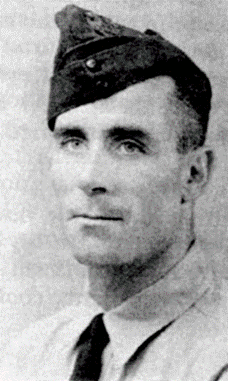
In 1942 he joined the Royal Australian Air Force. After doing his rookie’s course at Bradfield Park in Sydney, his first posting was to Townsville in North Queensland. After two years he was posted to Evans Head, NSW, as a guard (as a sporting shooter with the Murwillumbah Rifle Club he was well acquainted with firearms). Six months later he became an armourer. Early in 1945, he was posted to Borneo where he saw the end of World War 2. Leading Aircraftman Philip Lazenby was discharged on 2 January 1946.


LAC Philip Lazenby


On return to civilian life, he worked for six months for Len Pearson, his brother-in-law, on his banana plantation. Philip Lazenby was soon growing bananas in his own right, having leased land at Smiths Creek and pioneered the farm for dairying. After a few years and with a need for a more regular income, he went to work for the Far North Coast County Council, engaged in weed eradication in the Tweed and Richmond River areas. At this time, Crofton Weed was spreading, and outbreaks of Noogoora Burr were causing particular concern. He worked in this job for the next fourteen years.

In December 1963, he visited the UK and saw his father again. On return from England, Philip worked for the Shire Council for a little while, before joining McLeods Engineering Works in Murwillumbah, as a storeman.

Philip Lazenby’s wife Mary died in January 1985. He passed away in Murwillumbah in December 1997, aged 92 years. A man of modest expectations and modest public profile. Yet we know details of his life, from Philip Lazenby himself, from when he spoke of it to his daughter, Barbara Cook, in 1995.